
Prompt Engineering became one of the most talked-about AI skills during the rise of generative AI. Professionals learned that the way they communicate with an AI system could dramatically influence the quality of its response. However, as AI systems have become more capable, an important question has emerged: Is prompt engineering still an essential skill in 2026?
The short answer is yes—but prompt engineering has changed.
Instead, it is no longer simply about learning complicated prompting formulas or writing extremely long instructions. Moreover, modern AI systems can understand natural language remarkably well. The real skill is now about knowing how to communicate a goal clearly, provide the right context, define constraints, evaluate the result, and guide AI toward a useful outcome. Modern AI systems such as those developed by OpenAI, Anthropic and Google AI have become increasingly capable of understanding natural language.
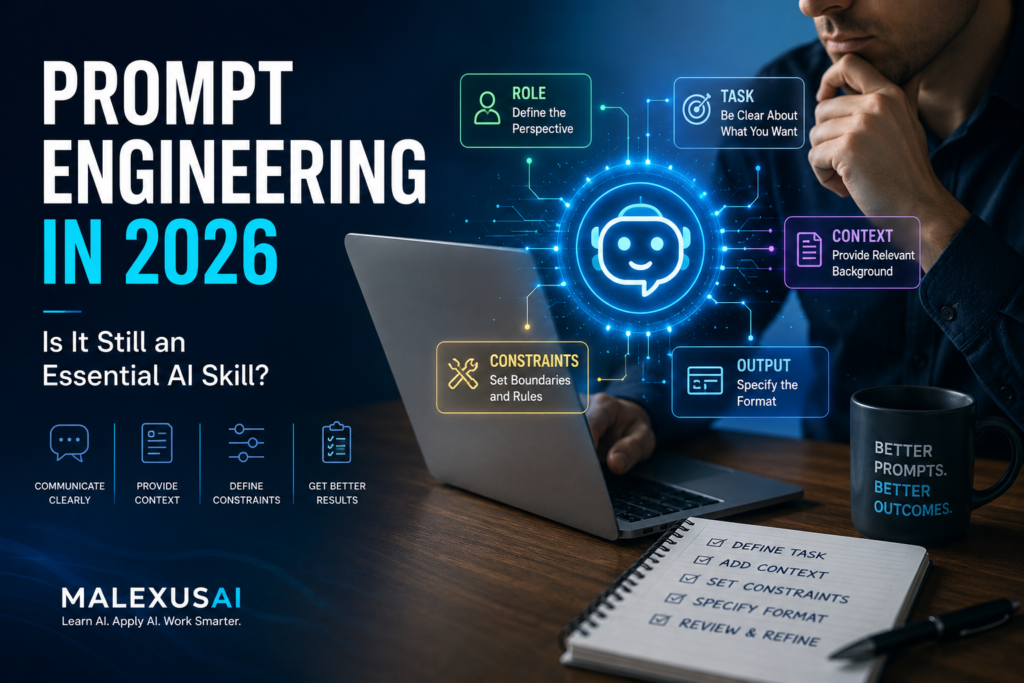
For students, educators, managers, researchers, entrepreneurs, developers, and business professionals, this makes prompt engineering less of a technical trick and more of a practical AI literacy skill. As a result, prompt engineering is becoming part of practical AI literacy.
In this article, we explore what prompt engineering means in 2026, why it still matters, which prompting techniques remain useful, what has changed, and how professionals can develop better AI interaction skills.
What Is Prompt Engineering?
Prompt engineering is the practice of designing and refining instructions given to an AI system to produce a desired result.
A prompt might be as simple as:
"Summarize this report."
Or it might provide much more context:
"Act as a business analyst. Review the following quarterly sales report. Identify the three most important trends, explain their possible causes, and present the findings as a concise executive briefing. Do not invent information that is not present in the report."
As a result, the second prompt provides:
- A role
- A task
- Context
- Expectations
- Constraints
- An output format
As a result, the second prompt usually produces a more useful response because the AI has a clearer understanding of what the user wants. However, prompt engineering is not about finding a magical sentence that always produces a perfect answer.
It is about effective human-AI communication.
Why Prompt Engineering Still Matters in 2026
AI systems have improved considerably, but they still do not automatically know:
- What your actual objective is
- Who your audience is
- What information matters most
- Which constraints apply
- What format you need
- What level of detail is appropriate
- Which assumptions should be avoided
- What organizational context you are working within
For example, consider the difference between:
"Write a report."
and:
"Prepare a 700-word executive report for senior management explaining why customer complaints increased during the last quarter. Use the supplied data only, identify three major causes, and conclude with practical recommendations."
The second instruction gives AI a much better target.
Therefore, even as AI becomes more capable, clear communication remains valuable.
Prompt Engineering Is Becoming Less About Tricks
Early discussions about prompt engineering often focused on elaborate techniques, special phrases, role prompting, and complex instructions.
Some of these techniques remain useful. Nevertheless, AI systems have become better at understanding ordinary language.
You do not necessarily need to write:
"You are an expert-level world-class..."
before every request. You can simply explain what you need.
For example:
"Explain this concept to a beginner using a practical banking example."
That may be enough. The evolution can be summarized as:
Old mindset: Find the perfect prompt.
Modern mindset: Clearly communicate the objective and collaborate with AI.
This is an important shift.
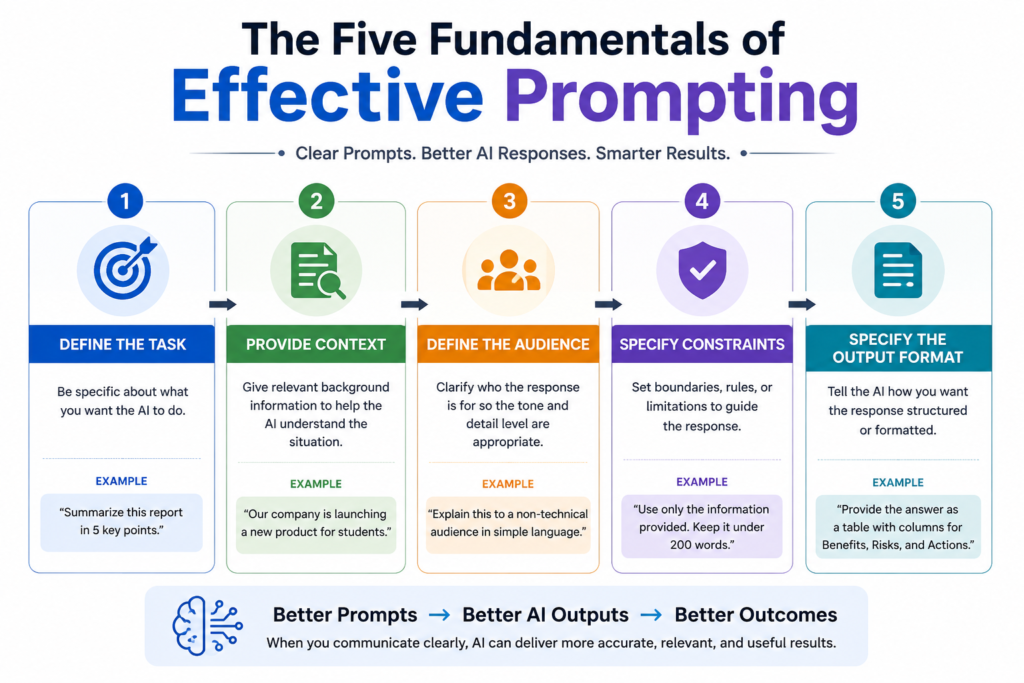
The Five Fundamentals of Effective Prompt Engineering
A useful prompt does not have to be complicated. In fact, in many professional situations, five elements are enough.
1. Define the Task
Tell AI exactly what you want it to do.
Instead of:
"Marketing."
Try:
"Create five marketing campaign ideas for a new online banking service."
2. Provide Context
AI needs relevant background information.
For example:
"The target audience is university students aged 18–25 who primarily use mobile banking."
As a result, context helps AI generate more relevant results.
3. Define the Audience
The same information may need to be communicated differently to different audiences.
For example:
"Explain this financial concept for a bank customer with no technical background."
is very different from:
“Explain this financial concept for experienced financial analysts.”
Therefore, always consider who will consume the output.
4. Specify Constraints
Tell AI what it should or should not do.
For instance, you can specify constraints such as:
- Keep it under 500 words.
- Use simple language.
- Do not invent statistics.
- Use only the information provided.
- Avoid technical terminology.
- Include three examples.
- Use a professional tone.
In this way, constraints reduce ambiguity.
5. Specify the Output Format
AI can produce the same information in many forms.
You can request:
- Table
- Bullet points
- Executive summary
- Report
- Presentation outline
- Checklist
- Action plan
- Comparison
- Step-by-step guide
For example
"Present the comparison in a four-column table."As a result, this can save considerable editing time.
A Simple Prompt Engineering Formula for Professionals
One of the easiest ways to improve your prompts is to use this structure:
Role + Task + Context + Constraints + Format
For example:
Role: Act as a business analyst.
Task: Analyze the following sales data.
Context: The company operates across five regions.
Constraints: Use only the supplied data and do not invent explanations.
Format: Provide three key findings followed by five recommendations.
Therefore, this structure works across many professional situations.
10 Prompt Engineering Techniques That Still Matter
Prompt engineering does not require memorizing hundreds of techniques. However, several practical approaches remain extremely useful.
1. Zero-Shot Prompting
In this approach, you ask AI to perform a task without providing an example.
For example:
"Classify the following customer comments as positive, negative, or neutral."
For straightforward tasks, this approach often works well
2. Few-Shot Prompting
By contrast, few-shot prompting provides examples before asking AI to perform the task.
For example:
Positive: "The service was excellent."
Negative: "The application process was frustrating.
In this way, examples help establish the pattern you want AI to follow.
3. Role-Based Prompting
You can specify a professional perspective.
For example:
"Act as an experienced HR manager."
Or:
"Act as a cybersecurity awareness trainer."
As a result, this can help establish an appropriate context and style. However, role prompting should not be treated as a guarantee that the AI possesses genuine professional credentials or real-world authority.
4. Structured Output
Ask AI to return information in a specific structure.
For example:
"Return the analysis using these headings: Problem, Evidence, Risks, Recommendations, Next Steps."
Consequently, structured output makes AI responses easier to review and reuse.
5. Iterative Prompting
You do not have to get everything right in the first prompt. Instead, a better approach is often:
Prompt → Review → Refine → Improve
For example:
"Create a first draft."
Next:
"Make the introduction more concise."
After that:
"Add two practical examples."
Finally:
"Rewrite it for senior executives."
This turns AI interaction into a collaborative process.
6. Ask AI to Identify Missing Information
Sometimes the problem is not the prompt. The problem is that you have not provided enough information.
You can ask:
"Before completing the task, identify the information you need from me."
In particular, this can be useful for complex projects
7. Ask for Alternatives
Instead of accepting the first answer, ask AI for multiple approaches.
For example:
"Give me three different strategies: low-cost, balanced, and aggressive."
As a result, professionals can compare options instead of accepting a single AI-generated recommendation.
8. Ask AI to Challenge Your Thinking
AI can be used as a critical thinking partner.
For example:
"Act as a skeptical reviewer. Identify the weaknesses, assumptions, and potential risks in this proposal."
More importantly, this is often more valuable than simply asking AI to make your idea sound better.
9. Provide Your Own Data
Generic prompts often produce generic answers. In contrast, relevant context produces more useful results.
Instead of:
"How can I improve sales?"
Provide information such as:
- Industry
- Target
- Customers
- Current Performance
- Main problems
- Available resources
- Constraints
Then ask AI to analyze the specific situation.
10. Ask for Verification Points
AI-generated information should not automatically be accepted as fact.
For important work, ask:
"Identify the claims in this response that should be independently verified."
As a result, this can help you identify areas requiring further research.
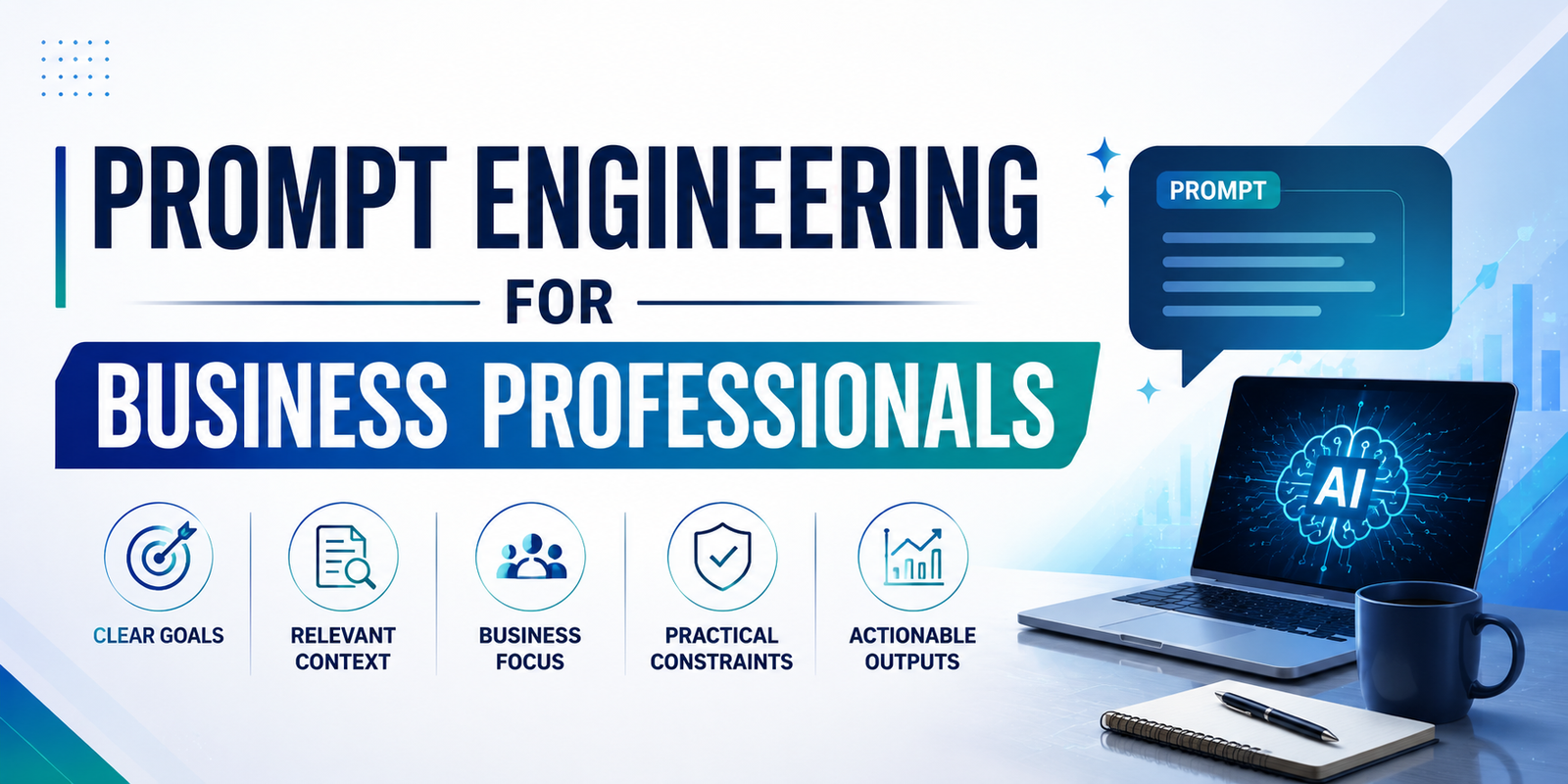
Prompt Engineering for Business Professional
Prompt engineering has particular value in business environments. Consider a manager who receives a 30-page operational report.
Instead of simply asking:
"Summarize this."
A stronger prompt might be:
"Act as a senior business analyst. Review this operational report and prepare an executive briefing for senior management. Identify the five most important findings, three operational risks, and five recommended actions. Keep the briefing under 700 words and clearly distinguish between information contained in the report and your interpretation."
This prompt is much more likely to produce something useful.
Prompt Engineering for Managers
Managers can use prompts to support:
- Meeting preparation
- Team communication
- Performance discussions
- Project planning
- Risk identification
- Report preparation
- Decision analysis
- Strategic brainstorming
For example:
"Review this project update and identify the three issues that require management intervention. For each issue, explain the potential impact and suggest two possible actions."
Prompt engineering helps turn AI into a thinking assistant rather than merely a content generator
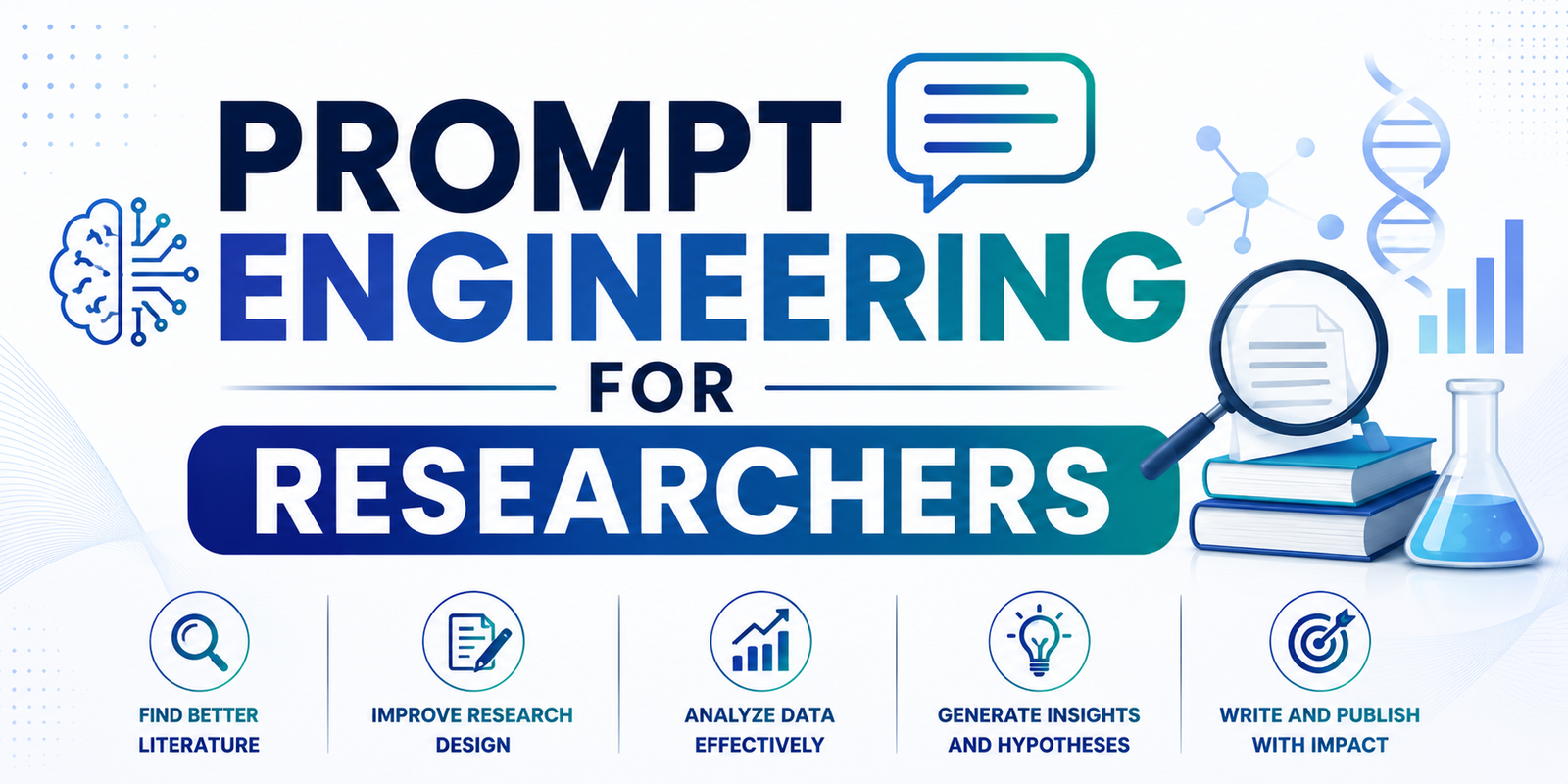
Prompt Engineering for Researchers
Researchers can use AI to support:
- Literature organization
- Research question refinement
- Concept explanations
- Data-analysis planning
- Academic writing improvement
- Research methodology discussions
- Interview-question development
- Thematic analysis support
However, researchers must carefully verify sources, citations, data interpretations, and claims.
AI should support the research process—not replace scholarly judgment.
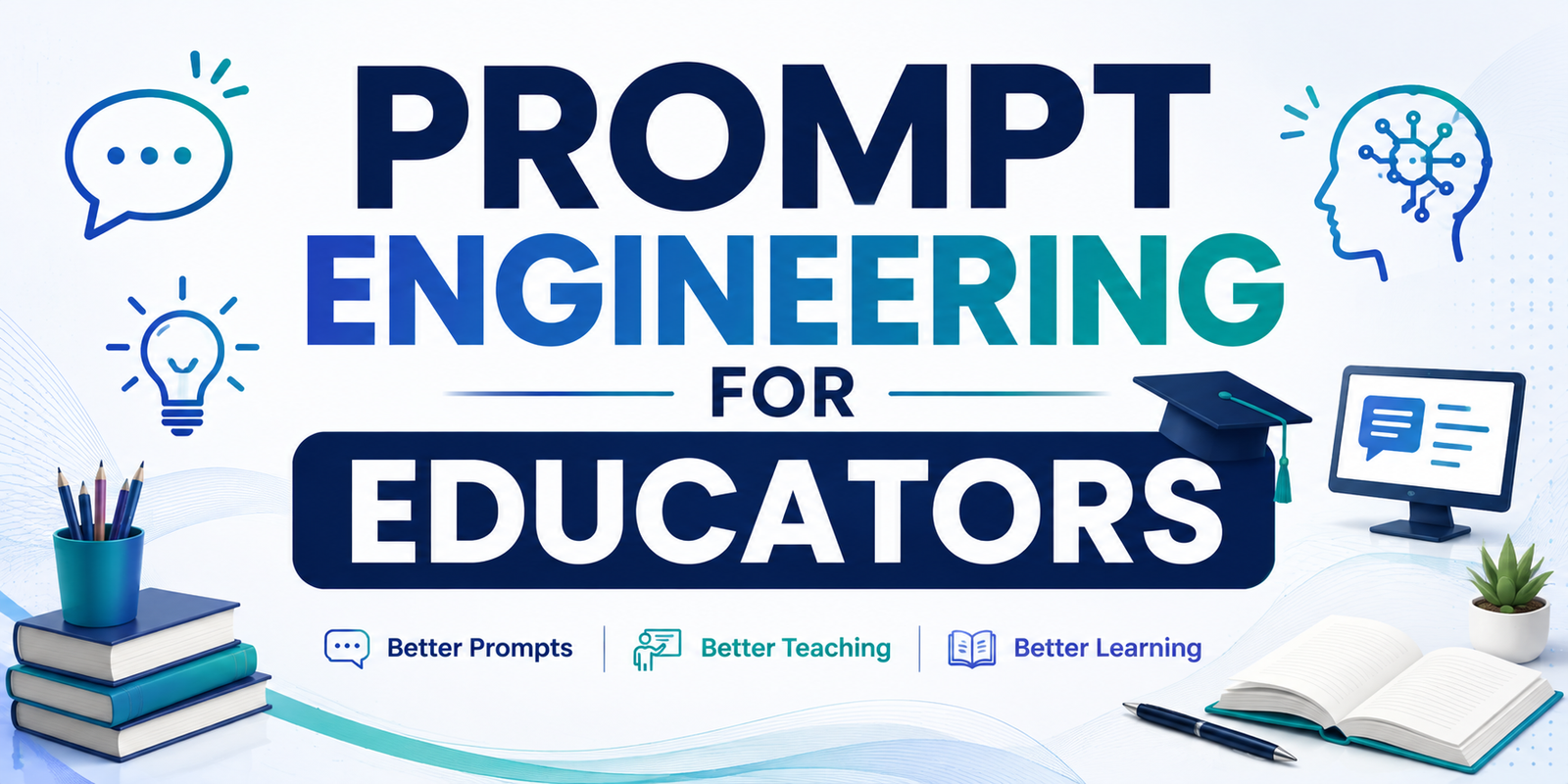
Prompt Engineering for Educators
Teachers and university faculty can use prompts to create:
- Lesson plans
- Learning activities
- Case studies
- Quizzes
- Assignment ideas
- Rubrics
- Explanations
- Differentiated learning materials
For example:
"Design a 50-minute undergraduate lesson on artificial intelligence ethics. Include learning outcomes, a short explanation, a real-world case, a group activity, five discussion questions, and a five-question assessment."
As a result, AI can dramatically reduce preparation time.
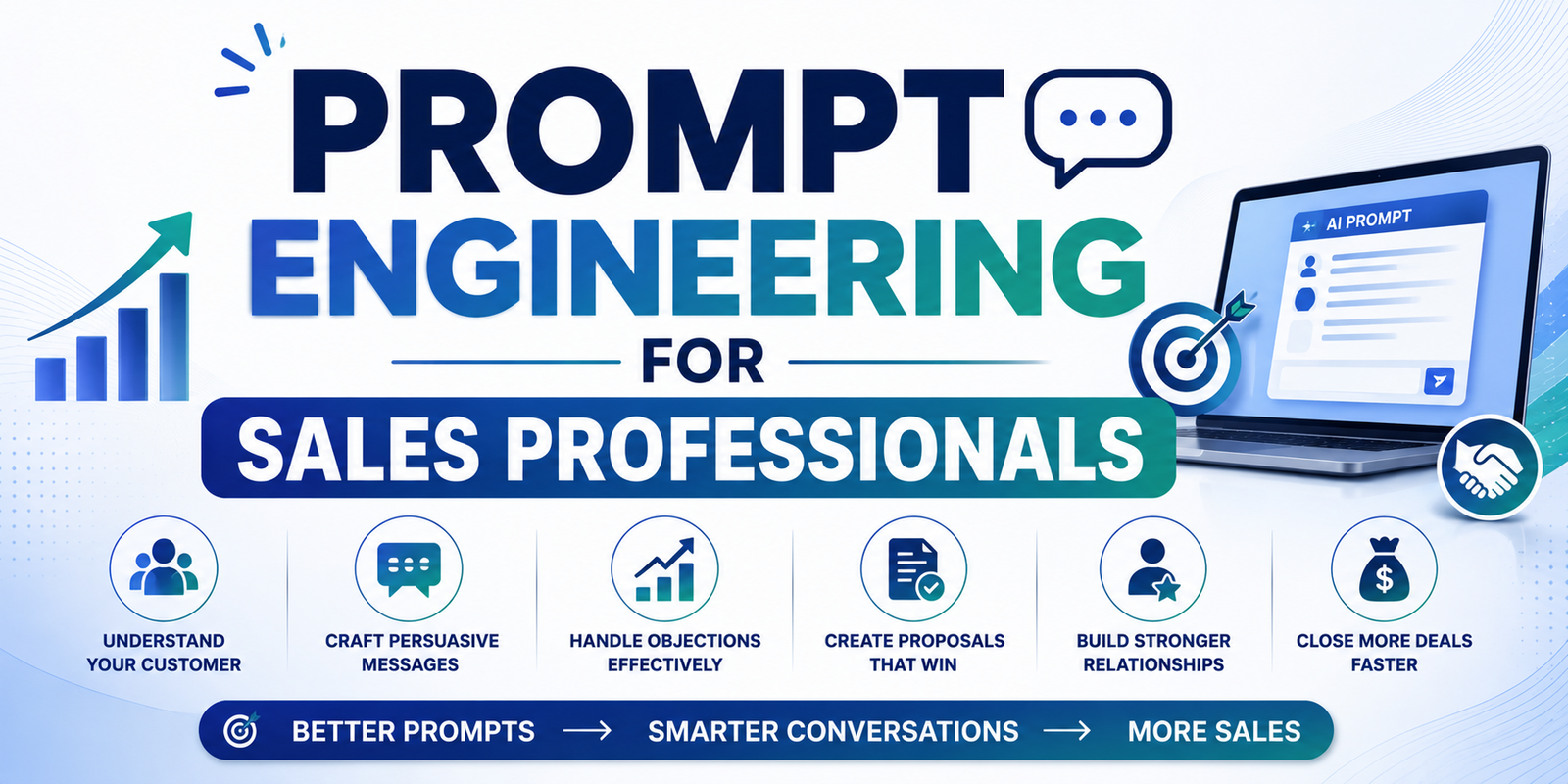
Prompt Engineering for Sales Professionals
Sales teams can use AI to prepare personalized communication.
For example:
"Draft a follow-up email for a potential customer who attended our product demonstration last week. Keep the tone professional and helpful. Summarize the key benefits discussed and suggest a next step. Keep the email under 150 words."
However, AI should produce only a first draft that the salesperson then reviews and personalizes.
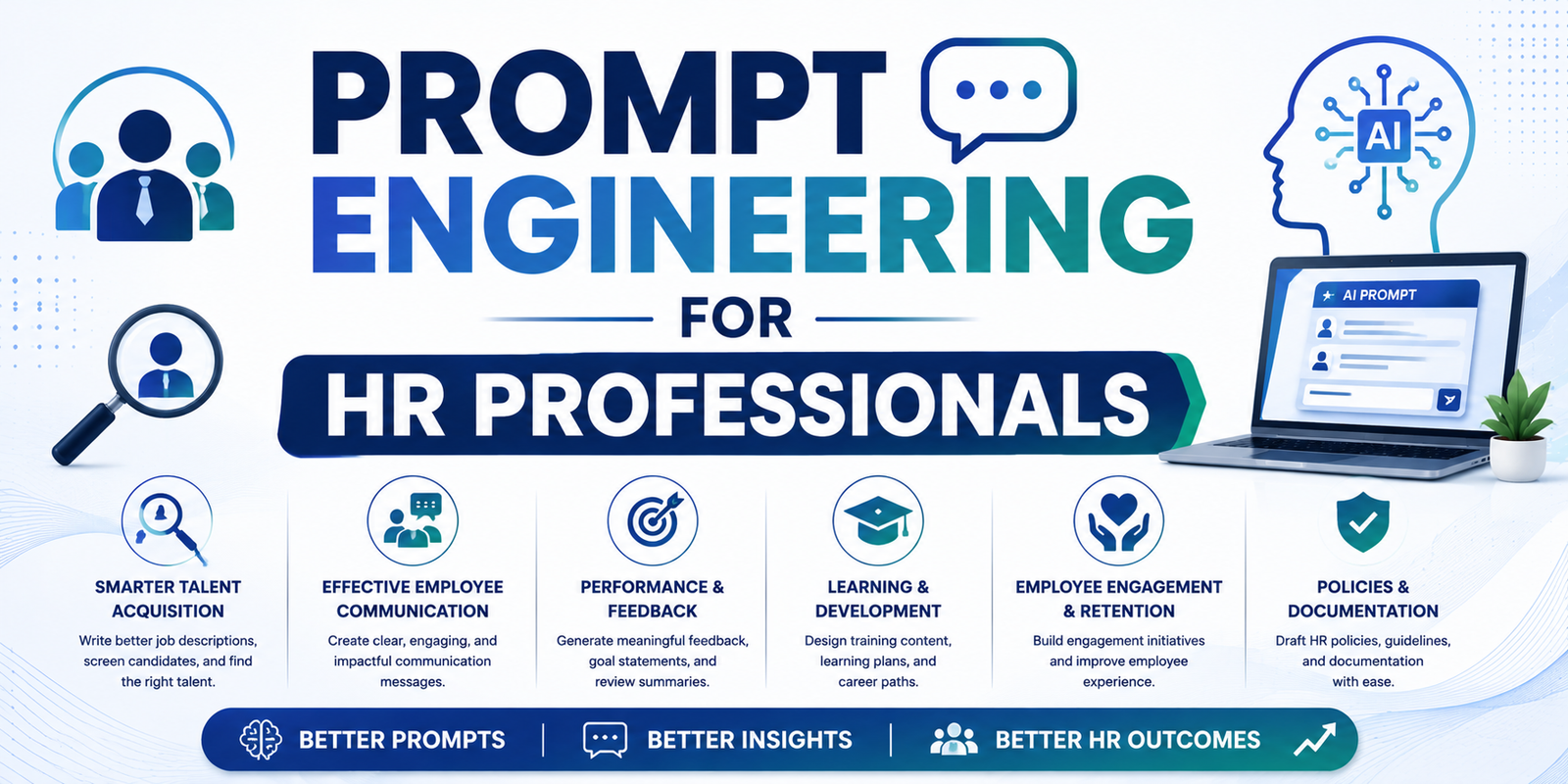
How HR Professionals Can Use Prompt Engineering
HR teams can use prompts for:
- Job descriptions
- Interview questions
- Training materials
- Onboarding plans
- Employee communication
- Survey analysis
For example:
"Create 10 competency-based interview questions for a mid-level project manager. Include what a strong answer should demonstrate."
AI can help reduce administrative workload while keeping humans responsible for hiring decisions and employee-related judgments.
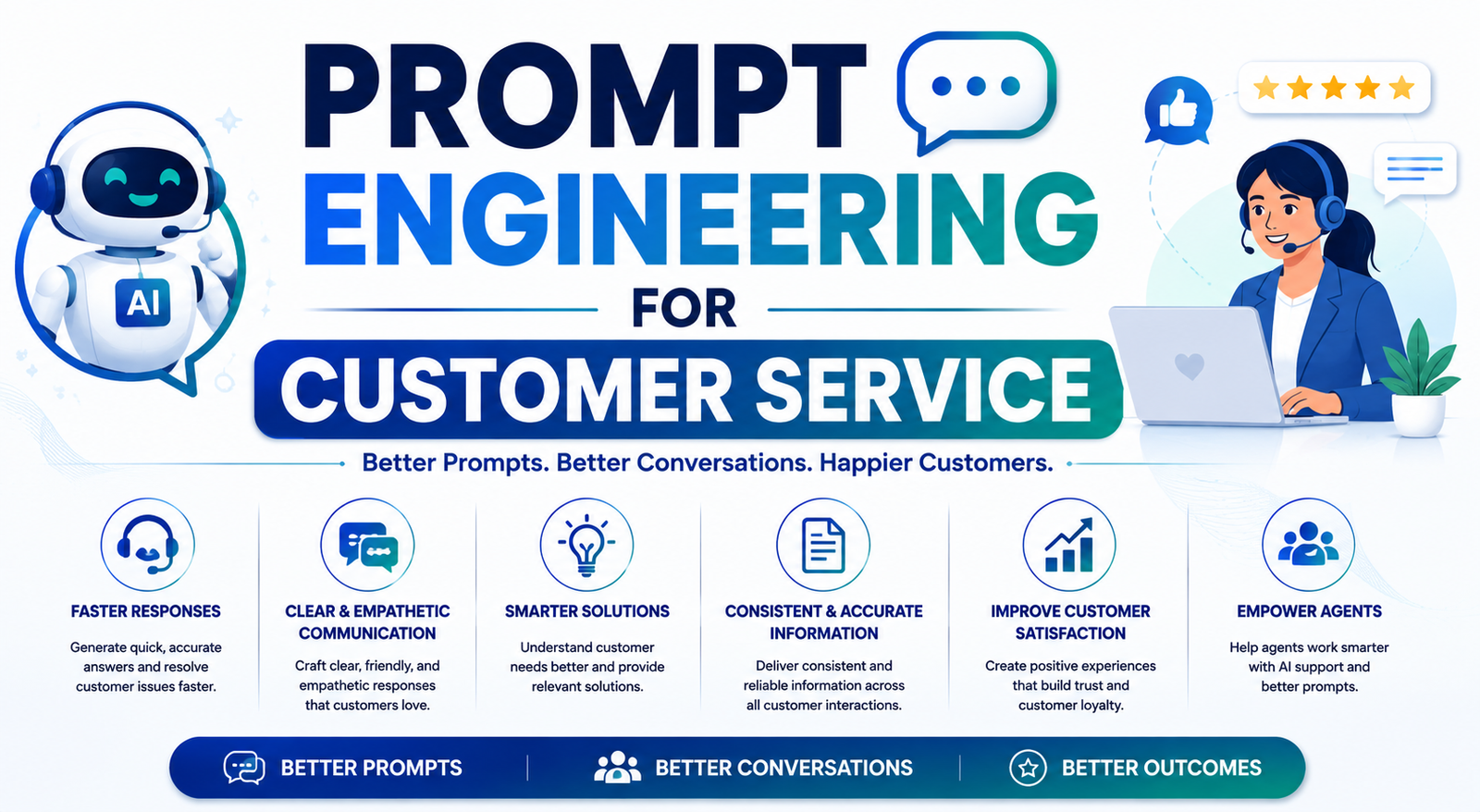
AI Prompts for Customer Service Teams
Customer-service teams can use AI to:
- Draft responses
- Classify complaints
- Summarize cases
- Identify recurring problems
- Create knowledge-base content
- Suggest response structures
For example:
"Rewrite this customer complaint response to sound empathetic, professional, and solution-oriented. Do not promise anything that is not included in the company's policy."
The final response should still be reviewed according to organizational procedures.
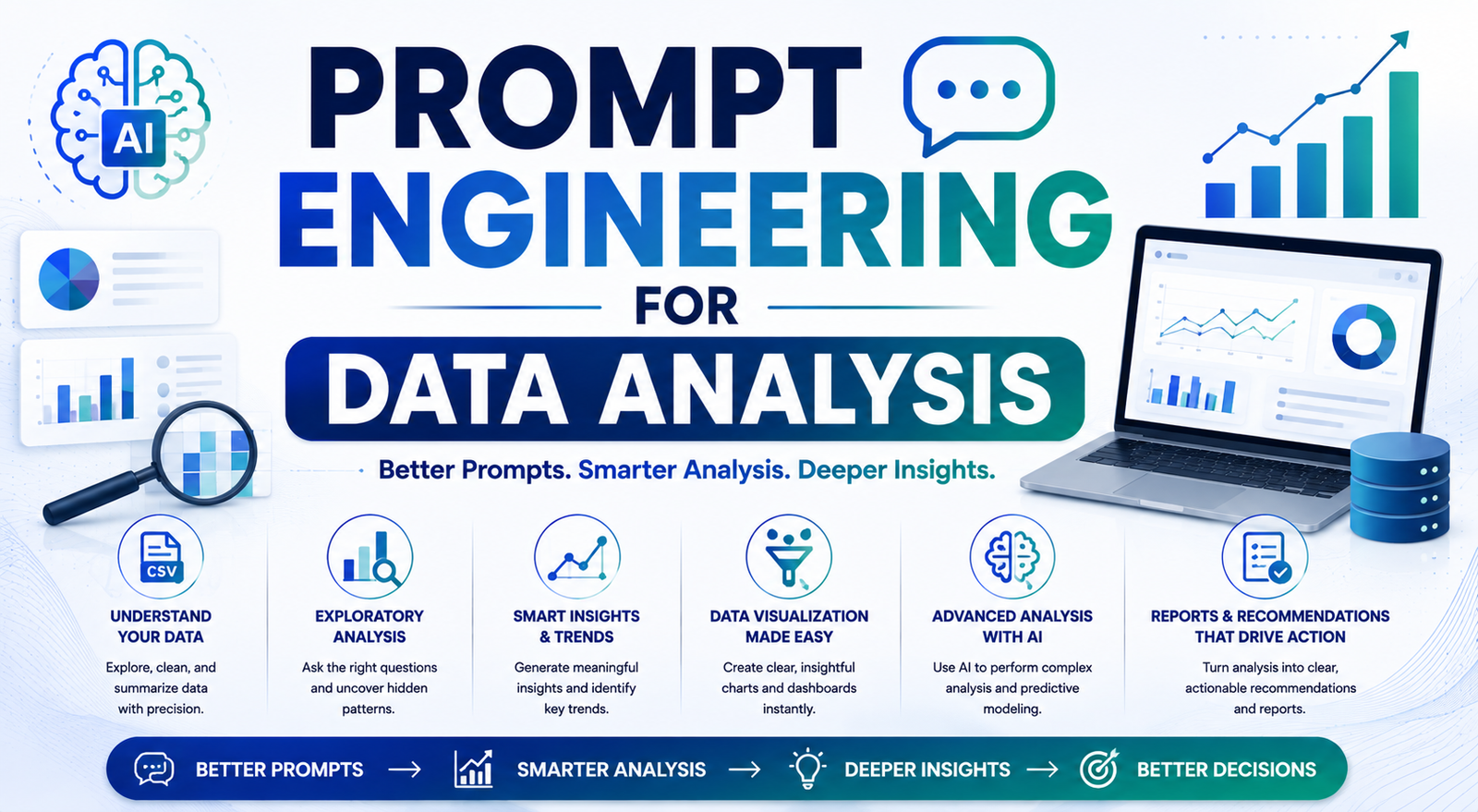
Using AI for Data Analysis
AI can also help professionals interact with data. For example, a weak request might be:
"Analyze this spreadsheet."
A better request might be:
"Analyze the sales data for the last 12 months. Identify month-over-month trends, the three strongest regions, the three weakest regions, and any unusual changes. Present the findings in a table and clearly state where the data is insufficient to support a conclusion."
The second prompt defines the analysis more precisely.
Common Prompt Engineering Mistakes
Mistake 1: Being Too Vague
“Make this better.”
Better:
“Rewrite this email to be concise, professional, and suitable for a senior executive.”
Mistake 2: Giving No Context
AI cannot reliably infer information you have not provided.
Instead, give it relevant background. If a task is highly complex, break it into stages.
Mistake 3: Asking for Too Many Things at Once
Instead, divide complex tasks into smaller, manageable stages.
Mistake 4: Accepting the First Answer
The first AI response is often a starting point.
Review and refine it.
Mistake 5: Failing to Verify Important Information
AI can make mistakes.
Always verify important facts and decisions.
Mistake 6: Sharing Sensitive Information
Do not paste confidential or sensitive information into an AI system unless your organization’s policies and approved tools permit it.
Mistake 7: Focusing on Prompt Tricks Instead of Outcomes
The objective is not to create clever prompts. Instead, the goal is to produce useful, accurate, and responsible results.
Frequently Asked Questions
Is prompt engineering still relevant in 2026?
Yes. Although AI systems have become better at understanding natural language, users still need to communicate objectives, context, constraints, and desired outputs clearly.
Do I need to learn complex prompt engineering techniques?
No. Most professionals can achieve significant benefits by mastering clear instructions, relevant context, constraints, structured outputs, and iterative refinement.
What is the difference between prompt engineering and context engineering?
Prompt engineering focuses primarily on designing instructions for AI. Context engineering focuses more broadly on providing the information, data, tools, and environment AI needs to perform a task effectively.
Can prompt engineering be learned without programming?
Yes. Many prompting skills can be developed without programming because they involve communication, problem definition, critical thinking, and evaluation.
Is prompt engineering a good career in 2026?
Prompting remains useful, but combining AI skills with domain expertise is generally a stronger long-term strategy. Professionals who understand both AI and a specific field can apply AI more effectively to real-world problems.
What is the most important prompting skill?
The ability to clearly define the desired outcome is one of the most important skills. Good prompts begin with a clear understanding of what you actually want AI to accomplish.
Can AI write its own prompts?
Modern AI systems can help generate, refine, and improve prompts. However, humans still need to define the objective, provide appropriate context, evaluate the output, and determine whether the resulting workflow is useful.
Conclusion
Prompt engineering in 2026 is not disappearing; it is evolving into a broader skill focused on clear communication, context, and effective AI collaboration
It is evolving.
The early era of generative AI encouraged people to search for the perfect prompt. Today, the next stage is more sophisticated: professionals are learning to define goals, provide context, manage AI workflows, evaluate outputs, and combine artificial intelligence with human expertise
That means you do not need to become a “prompt wizard.”
You need to become an effective AI collaborator.
Ultimately, the professionals who master this skill will not simply know what to type into an AI system. They will know what to ask, why to ask it, what information to provide, how to evaluate the answer, and what to do with the result. And that is a much more valuable skill for the AI-powered workplace of 2026 and beyond.
AI is getting better at understanding us. The next competitive advantage is learning how to communicate with it intelligently.
Want to build practical AI skills? Explore more AI guides, tutorials, career insights, and practical resources on Malexus AI. Home – Malexus AI