Learning AI can open new career and productivity opportunities, but many beginners make mistakes that slow their progress. Common problems include relying too heavily on AI, trying to learn too many tools, neglecting digital and human skills, failing to verify AI-generated information, and avoiding practical projects.
This guide explains eight common AI learning mistakes and shows you how to avoid them. By developing AI literacy, critical thinking, digital skills, and real-world experience together, you can build a stronger foundation for long-term success.
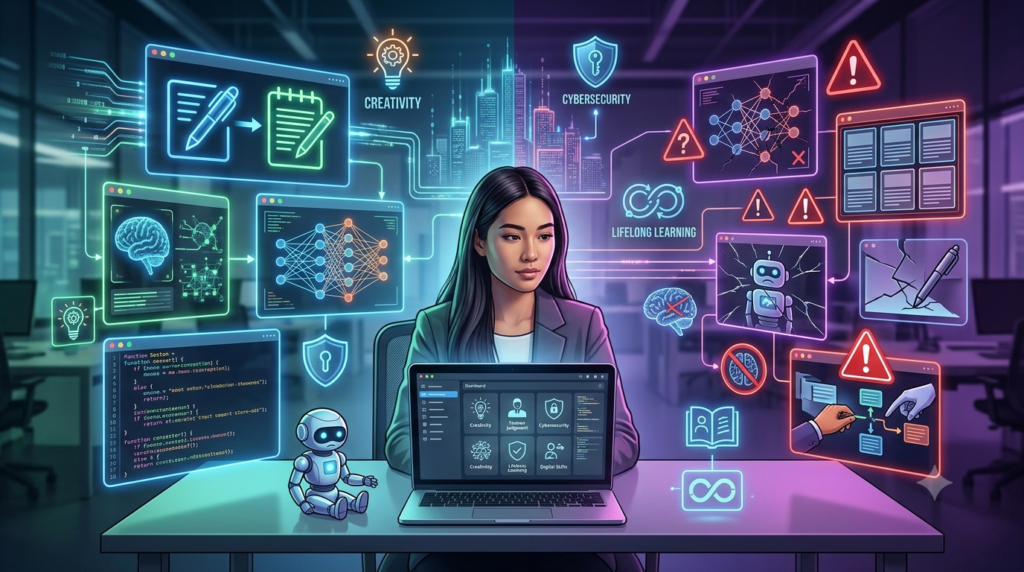
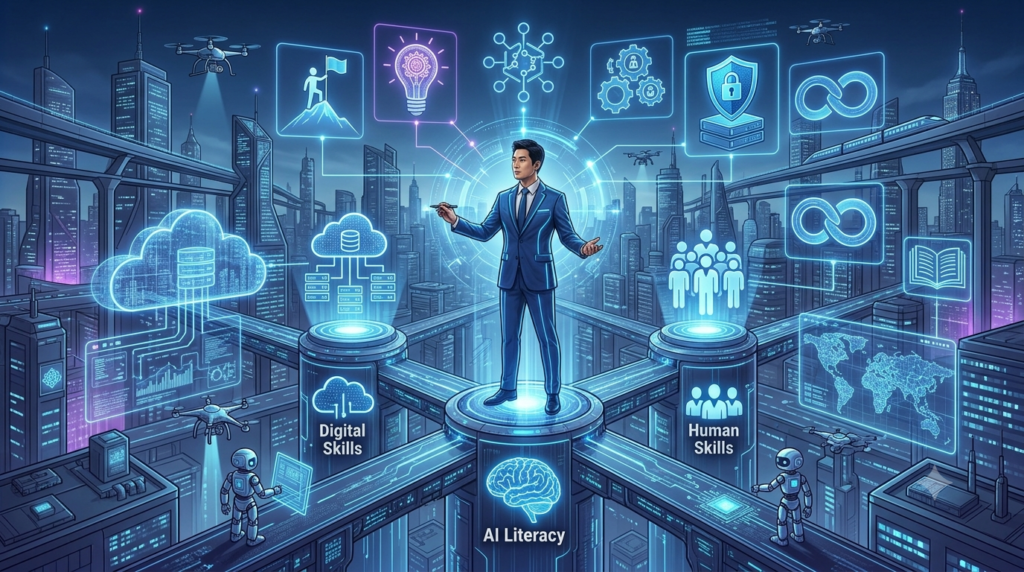
However, many people make a critical mistake—they focus only on learning AI tools while ignoring the broader knowledge and skills needed to use them effectively. Learning AI isn’t about collecting dozens of tools or writing better prompts. It’s about developing the right combination of AI literacy, digital skills, critical thinking, and practical experience. By recognizing and avoiding common mistakes early, you can accelerate your learning, improve your career prospects, and become a more confident AI professional.
What Are the Most Common AI Learning Mistakes
- Relying Too Much on AI
- Ignoring Essential Digital Skills
- Neglecting Human Skills
- Using AI Without Fact Checking
- Trying to Learn Every AI Tool
- Focusing on Features Instead of Solving Problems
- Not Building Real World Projects
- Stopping Learning After One Course
Why Avoiding Common AI Learning Mistakes Matters
The rapid growth of AI has created an overwhelming number of courses, tutorials, and applications. While this abundance creates exciting opportunities, it also leads many learners down the wrong path. Professionals who avoid common learning mistakes are more likely to:
- Build practical AI expertise
- Adapt to changing technologies
- Improve productivity
- Earn employer trust
- Develop future-ready career skills
- Make better decisions using AI
Instead of simply knowing how to use AI, successful professionals understand when, why, and where to use it.
AI Statistics at a Glance (2026)
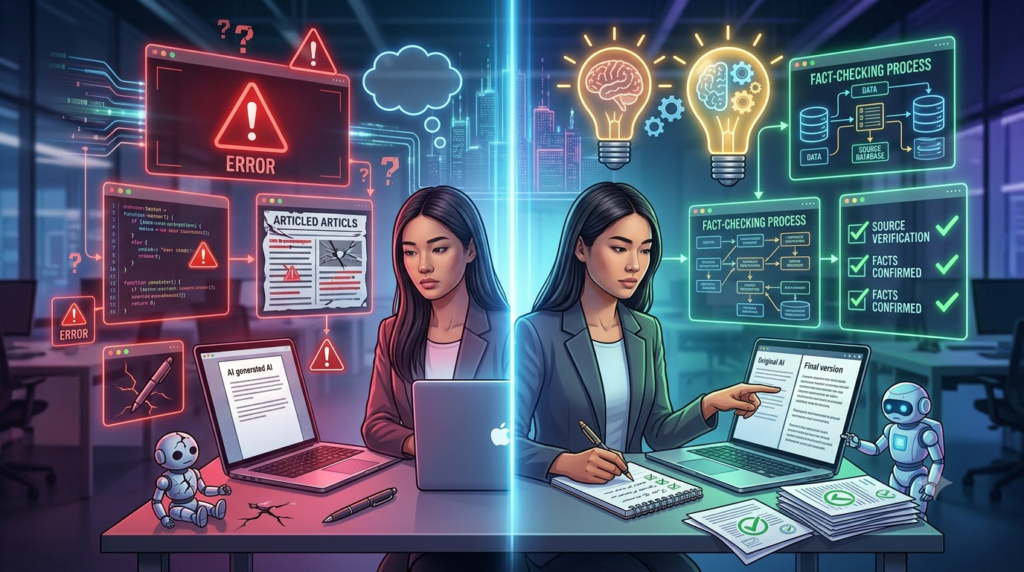
Understanding these common AI learning mistakes will help you build stronger AI, digital, and human skills for long-term career success.
Common AI Learning Mistake #1: Relying Too Much on AI
One of the biggest mistakes beginners make is allowing AI to think for them.
Modern AI tools can write articles, generate code, summarize research, analyze data, and answer complex questions within seconds. While these capabilities are impressive, overreliance can weaken independent thinking, creativity, and analytical skills. Professionals who depend entirely on AI often struggle when:
- AI produces incorrect information
- Context is missing
- Unique judgment is required
- Creative solutions are needed
- Ethical decisions must be made
Remember: AI should support your thinking—not replace it. Whether you’re writing reports, developing software, or conducting research, your expertise remains essential.
Best Practice
Use AI to:
- Brainstorm ideas
- Speed up repetitive work
- Organize information
- Improve productivity
But always make the final decisions yourself.
Common AI Learning Mistake #2: Ignoring Essential Digital Skills
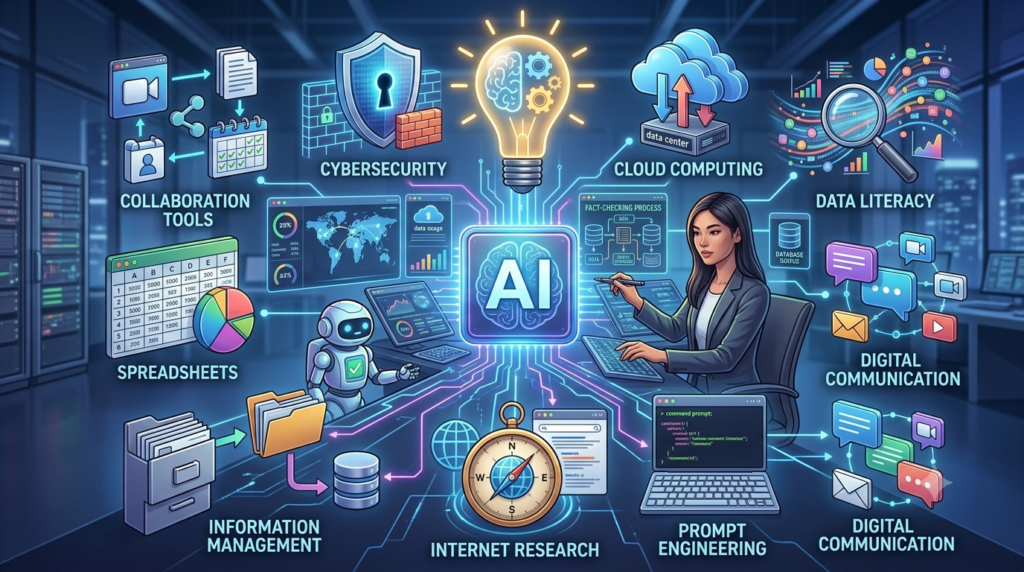
Many learners spend months mastering AI prompts while neglecting the digital skills required to apply AI effectively in real-world environments. Without strong digital foundations, even the best AI tools have limited value. Important digital skills include:
- Data literacy
- Spreadsheet and data analysis
- Cybersecurity awareness
- Cloud collaboration
- Digital communication
- Information management
- Internet research
- File organization
- Privacy and security practices
Organizations don’t simply hire people who know ChatGPT—they hire professionals who understand digital workflows.
Best Practice
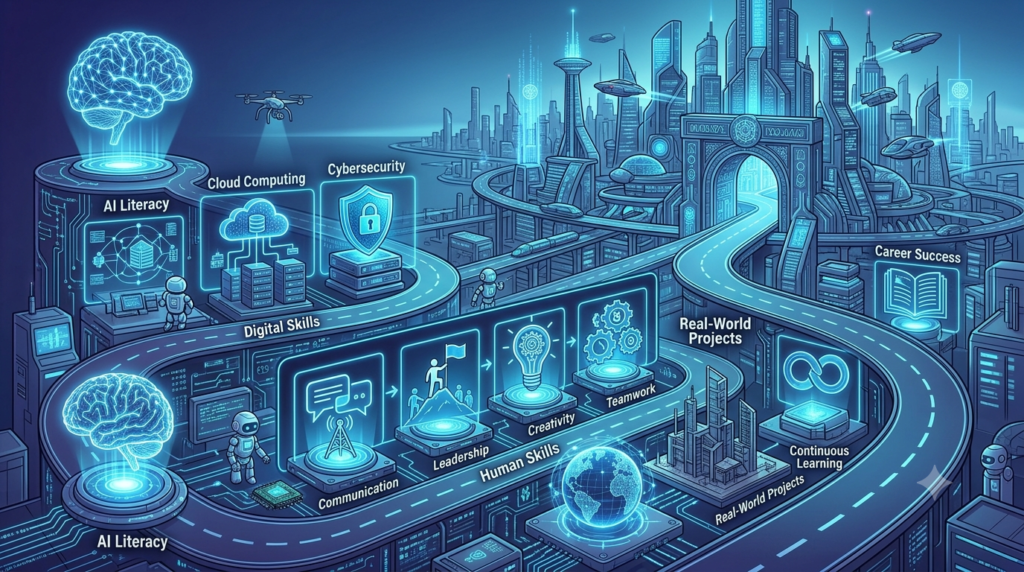
Develop digital skills alongside AI proficiency. Think of AI as the engine, while digital skills are the road that allows the engine to move efficiently. If you’re just beginning your AI journey, also read our guide on AI Tools Alone Are Not Enough: Develop Digital and Human Skills.
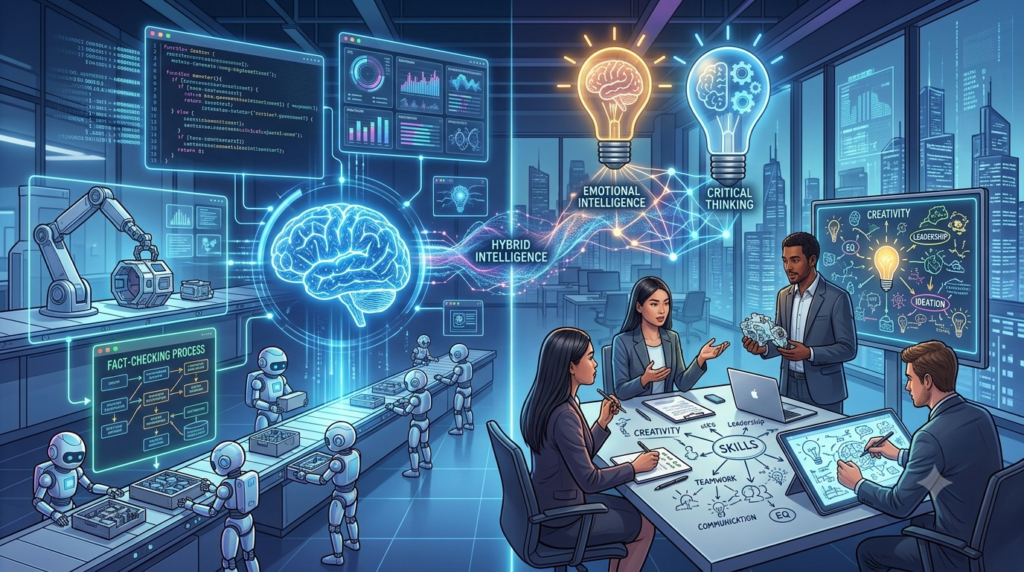
Common AI Learning Mistake #3: Neglecting Human Skills
Artificial intelligence excels at processing information, but it cannot fully replace uniquely human capabilities. As AI automates repetitive work, employers increasingly prioritize professionals who demonstrate:
- Communication
- Leadership
- Creativity
- Critical thinking
- Emotional intelligence
- Collaboration
- Adaptability
- Ethical judgment
- Problem-solving
These human skills often determine career advancement more than technical knowledge alone.
Best Practice
Spend as much time improving your communication, teamwork, and leadership skills as you spend learning AI technologies. The most valuable professionals combine technical knowledge with strong interpersonal abilities.
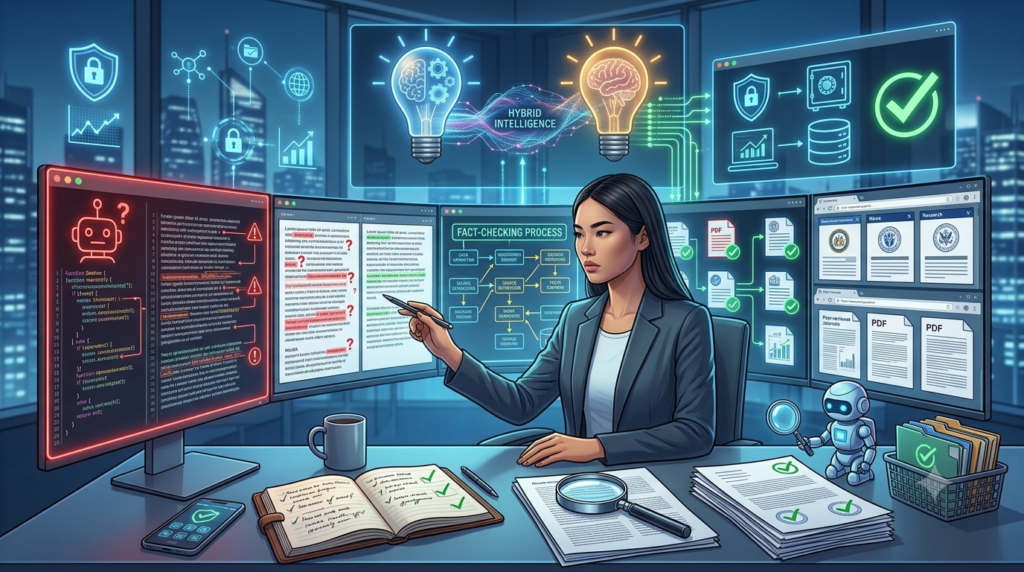
Common AI Learning Mistake #4: Using AI Without Fact-Checking
AI systems can occasionally generate inaccurate, outdated, biased, or fabricated information—a phenomenon commonly known as AI hallucination. Blindly trusting AI responses can lead to:
- Academic mistakes
- Business losses
- Poor strategic decisions
- Damaged credibility
- Legal or compliance issues
This is especially important when working in fields such as:
- Healthcare
- Finance
- Education
- Law
- Research
- Government
Best Practice
Before using AI-generated information:
- Verify facts using reliable sources.
- Check official documentation.
- Compare multiple references.
- Confirm statistics and dates.
- Review expert opinions.
A simple rule to remember:
Trust AI—but verify everything important.
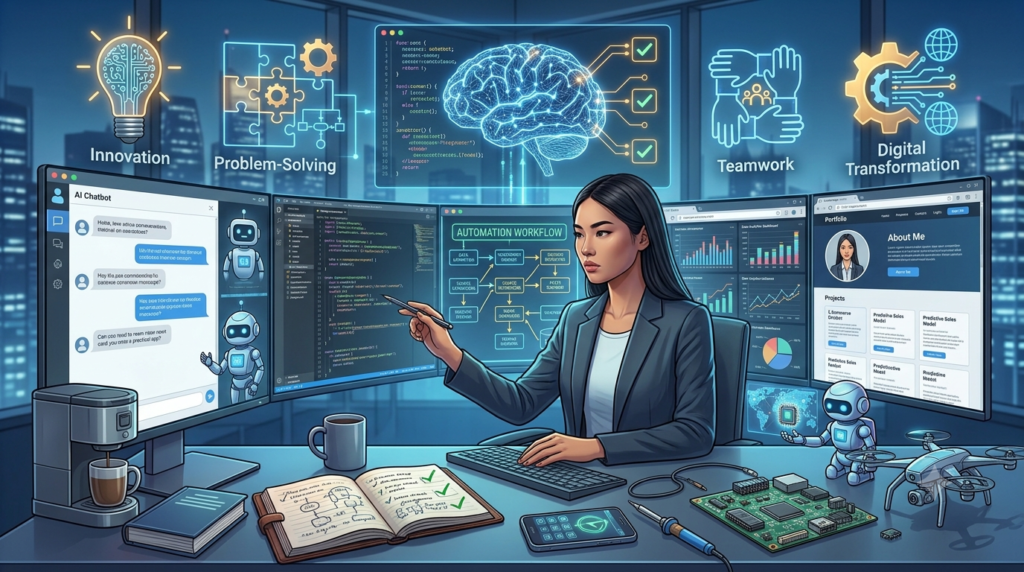
Common AI Learning Mistake #5: Trying to Learn Every AI Tool
Hundreds of new AI applications are released every year. Many beginners jump from one tool to another, believing they must master every platform.
The result is usually:
- Information overload
- Confusion
- Surface-level knowledge
- Reduced productivity
Successful learners focus on mastering a small number of high-impact tools before expanding their toolkit. For example, instead of learning 30 AI applications, become highly proficient with the few that best support your profession.
Best Practice
Focus on quality rather than quantity. Deep expertise creates far more value than knowing dozens of tools superficially. You may also enjoy our article on Best AI Tools for Beginners in 2026.
Common AI Learning Mistake #6: Focusing on Features Instead of Solving Problems
Many learners become fascinated by AI capabilities rather than understanding how AI creates value.
Employers rarely ask:
“Can you use this AI tool?”
Instead, they ask:
- Can you improve efficiency?
- Can you reduce costs?
- Can you automate workflows?
- Can you make better decisions?
- Can you solve business challenges?
The goal isn’t learning software.
The goal is solving problems.
Best Practice
Before using any AI tool, ask yourself:
- What problem am I solving?
- How does AI improve this process?
- Is AI the best solution?
- Can I measure the results?
Problem-solving mindset always beats tool obsession.
Common AI Learning Mistake #7: Not Building Real-World Projects
Watching tutorials creates familiarity. Building projects creates expertise. Many learners complete multiple AI courses but never apply what they’ve learned. Employers value evidence of practical experience, such as:
- AI-powered applications
- Research projects
- Automation workflows
- Business case studies
- Personal portfolios
- GitHub repositories
- Data analysis projects
- Chatbots
- AI integrations
Projects demonstrate your ability to convert knowledge into results.
Best Practice
Create practical projects that combine:
- AI tools
- Digital skills
- Critical thinking
- Human creativity
- Real-world problem solving
A strong portfolio often speaks louder than certificates.
Common AI Learning Mistake #8: Stopping Learning After One Course
Artificial intelligence evolves faster than almost any other technology. A course completed today may become outdated within a year as new models, tools, and best practices emerge. Professionals who embrace lifelong learning remain more adaptable and competitive. Continuous learning includes:
- Reading industry news
- Exploring new AI tools
- Following trusted experts
- Attending webinars
- Practicing regularly
- Experimenting with new workflows
- Learning from real projects
Best Practice
Dedicate time each week to improving your AI knowledge. Even one hour of consistent learning can produce significant long-term growth.
How to Avoid These AI Learning Mistakes
Future-ready professionals don’t chase every new AI trend. Instead, they develop a balanced combination of technical expertise, digital competence, and human capabilities. Follow these guiding principles:
- Use AI responsibly rather than blindly.
- Strengthen your digital skills continuously.
- Invest in communication and leadership.
- Verify AI-generated information.
- Solve meaningful problems instead of collecting tools.
- Build practical projects.
- Keep learning throughout your career.
This balanced approach creates professionals who remain valuable regardless of how quickly technology changes. By avoiding these common AI learning mistakes, you’ll become a more confident and future-ready AI professional.
Final Thoughts
Avoiding common AI Learning mistakes is just as important as learning AI itself —but success depends on how you learn. Rather than chasing every new tool or relying entirely on artificial intelligence, focus on building a balanced skill set that combines AI expertise, digital competence, and uniquely human capabilities. The professionals who thrive in the AI era won’t be those who know the most tools. They’ll be the ones who think critically, solve meaningful problems, communicate effectively, and adapt to continuous change. Avoid these common mistakes, keep learning, and apply your knowledge through real-world projects. By doing so, you’ll build a strong foundation for long-term career success in an AI-driven world. Continue your learning with our AI Career Roadmap for Beginners
- “Technology is best when it brings people together.” — Matt Mullenweg
- The Future belongs to professionals who combine artificial intelligence with critical thinking, digital competence and human creativity.
Frequently Asked Questions (FAQs)
Is learning AI tools enough to build a successful career?
No. AI tools are valuable, but long-term success also requires digital skills, critical thinking, communication, and practical experience.
What is the biggest mistake beginners make when learning AI?
Relying too heavily on AI without understanding the underlying concepts or verifying the accuracy of AI-generated information.
Should I learn many AI tools or focus on a few?
Focus on mastering a few high-impact AI tools relevant to your profession before expanding your toolkit.
Why are human skills important in the age of AI?
As AI automates repetitive tasks, employers increasingly value creativity, leadership, communication, emotional intelligence, and problem-solving.
How can I gain practical AI experience?
Build real-world projects, create a portfolio, contribute to open-source initiatives, automate workflows, or solve actual business problems using AI.
How often should I update my AI skills?
AI evolves rapidly, so dedicating regular time each week to learning new tools, techniques, and industry trends is a good long-term strategy.
What is the best way to learn AI without making common mistakes?
Start with AI fundamentals, learn a few relevant tools, verify AI-generated information, and practice through real-world projects.
Can making mistakes help you learn AI?
Yes. Mistakes reveal gaps in understanding. Analyze what went wrong, learn the correct approach, and apply it to future projects.
Author’s Note: The views and interpretations presented in this article are based on the author’s professional experience and publicly available educational frameworks. References to international accreditation bodies and educational organizations are provided for informational purposes only and do not imply endorsement or affiliation.