AI literacy is one of the most important digital skills in 2026. As artificial intelligence becomes part of everyday life, it is also making it easier to create fake news, deepfakes, and misleading online content. Understanding how to identify AI-generated misinformation and verify information has become essential for students, professionals, educators, businesses, and everyday internet users.
Have you ever seen a shocking news story on social media and shared it without checking whether it was true? Or perhaps you’ve watched a video that looked completely real, only to discover later that it was created using artificial intelligence.

These situations are becoming more common every day. Thanks to Generative AI, anyone can now create realistic text, images, videos, and even voice recordings in just a few minutes. While this technology offers amazing opportunities for learning, creativity, and productivity, it also makes it easier to spread false or misleading information.
This is why AI literacy has become one of the most important digital skills in 2026.
New to AI literacy? Start with our comprehensive guide, What Is AI Literacy? Complete Beginner’s Guide to AI Skills (2026)
, to understand its meaning, importance, and real-world applications before exploring how it helps combat misinformation.
Why AI Literacy Is Essential for Fighting Misinformation

Years ago, creating fake news or editing videos required expensive software and advanced technical skills. Today, many AI tools can do it automatically.
Someone can ask an AI tool to:
- Write a fake news article.
- Create an image of an event that never happened.
- Clone someone’s voice.
- Generate a realistic video of a famous person saying something they never actually said.
At first glance, these creations may look completely authentic. Without AI literacy, it becomes difficult to know what is real and what is not. Understanding how AI creates both useful and misleading content begins with developing strong AI literacy skills. If you’re just starting your AI journey, read our Beginner’s Guide to Artificial Intelligence to build a solid foundation before learning how to identify AI-generated misinformation.
A Simple Real-Life Example
Imagine you receive a WhatsApp message saying:
“The government has announced that all universities will remain closed for one month due to a new policy.”
The message looks official and even includes a government logo. Many people immediately forward it to family and friends. Later, it turns out the entire announcement was generated using AI. Someone who understands AI literacy would stop and ask:
- Which official website published this?
- Is this news reported by reliable media?
- Can I verify it from another trusted source?
Instead of forwarding the message immediately, they verify it first. This simple habit helps stop misinformation from spreading.
AI Literacy and Deepfakes: What You Need to Know
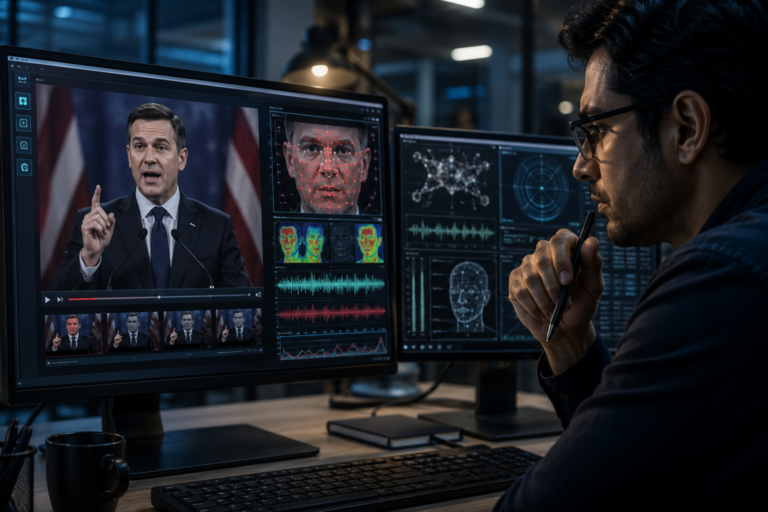
One of the biggest challenges today is something called a deepfake. A deepfake is an AI-generated image, video, or voice recording that looks or sounds like a real person.
For example, imagine watching a video of a famous athlete announcing retirement. Thousands of people believe the news. A few hours later, experts reveal that the entire video was created using AI. The athlete never made that statement. Deepfakes can confuse people, damage reputations, and even influence public opinion.
AI Adoption Is Growing Rapidly
Artificial intelligence is no longer an emerging technology—it is becoming a standard tool across industries. According to the McKinsey Global Survey on AI (2025), 78% of organizations reported using AI in at least one business function, up from 72% in early 2024. The survey also found that the use of generative AI has grown rapidly in areas such as marketing, customer service, software development, and operations. As AI becomes more common in the workplace, professionals need AI literacy to use these tools effectively, evaluate AI-generated outputs, and make informed decisions.
AI Literacy Is Becoming a Future-Ready Skill
The World Economic Forum’s Future of Jobs Report 2025 identifies AI, big data, and technological literacy among the fastest-growing skills required by employers over the next five years. The report also estimates that 39% of workers’ core skills will change by 2030, highlighting the need for continuous learning and digital upskilling. Developing AI literacy today helps students and professionals stay competitive, adapt to changing job requirements, and collaborate confidently with AI technologies.
AI Literacy Example: Using ChatGPT for Homework
Suppose a student asks an AI chatbot:
“Who invented the telephone?”
The AI answers:
“Thomas Edison.”
The student copies the answer into an assignment without checking. Later, the teacher explains that the widely recognized inventor of the practical telephone is Alexander Graham Bell. The student loses marks not because AI is useless, but because they trusted the answer without verifying it.
An AI-literate student would check a reliable textbook or trusted educational website before submitting the assignment. AI is a helpful assistant, but it should not replace critical thinking.

AI Literacy Example: Verifying AI-Generated Images
Imagine you see a social media post showing snow falling in the Desert. The picture looks beautiful and realistic. Thousands of people share it. Before believing it, an AI-literate person asks:
- Is this image from a trusted news organization?
- Was it created using AI?
- Are there reports confirming this event?
Sometimes, a few minutes of verification can prevent the spread of false information.
AI Literacy Example: Avoiding AI Voice Cloning Scams
AI can now imitate someone’s voice surprisingly well. Imagine receiving a phone call that sounds exactly like your brother.
He says:
“I’m in an emergency. Please send money immediately.”
Many people might panic and transfer the money. An AI-literate person would first call their brother directly or verify the situation through another family member. That one extra step could prevent financial fraud.

How AI Literacy Helps You Verify Information
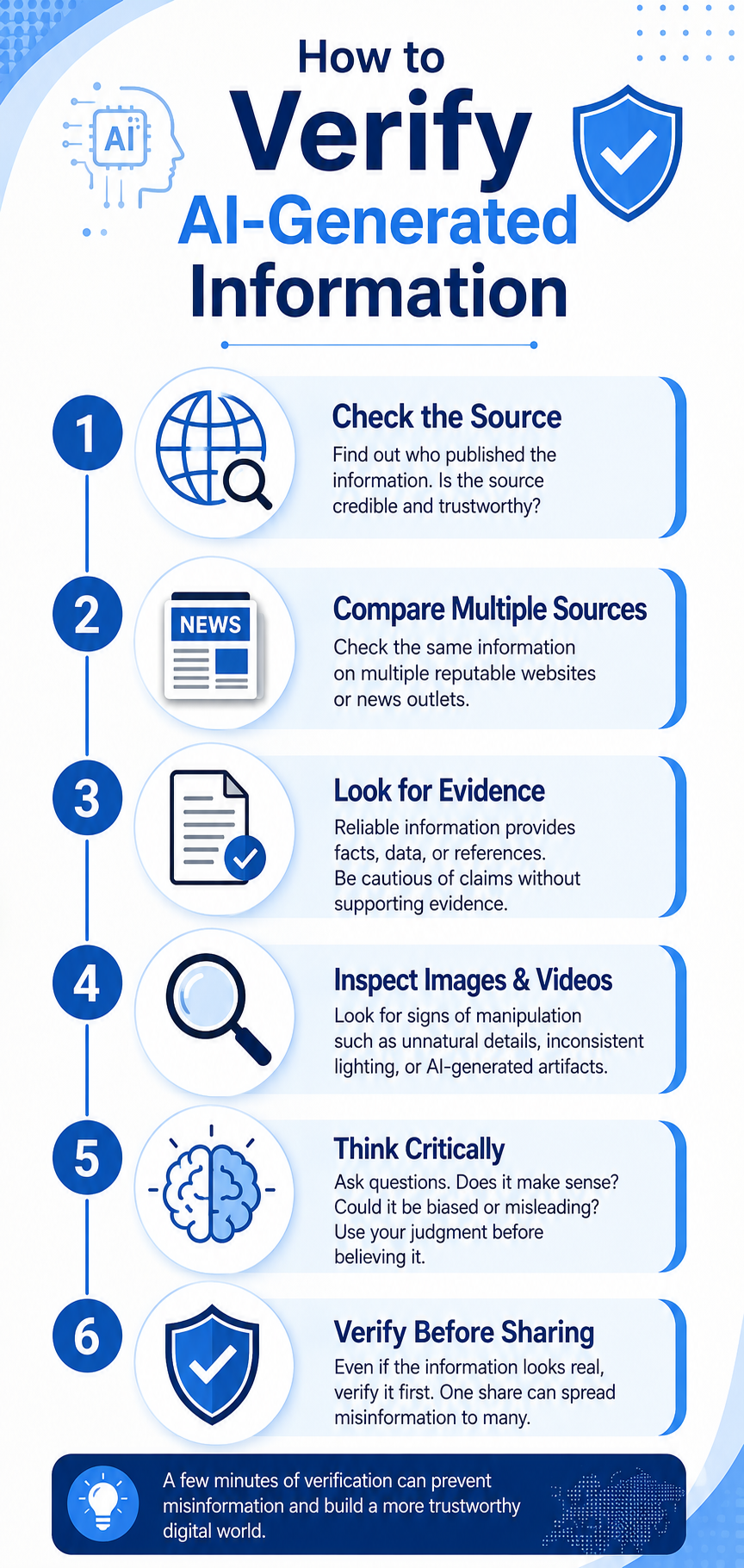
You don’t need to be a computer scientist to protect yourself. Here are a few simple habits everyone can follow:
Check the Source
Ask yourself:
- Who published this?
- Is the source trustworthy?
- Does it provide evidence?
Reliable information usually comes from recognized organizations, educational institutions, government agencies, or established news outlets.
Don't Trust Every Viral Post
Just because thousands of people have shared something doesn’t mean it is true. False information often spreads faster than accurate information because it attracts attention. Always verify before sharing.
Compare Multiple Sources
If a major event really happened, several trusted organizations will usually report it. If only one unknown website mentions it, be cautious.
Think Before You Click "Share"
A simple question can make a big difference:
“What if this information is false?”
Taking just one minute to verify information can stop misinformation from spreading to hundreds of people.

Why AI Literacy Requires Critical Thinking
AI can generate answers in seconds. But AI doesn’t always know whether those answers are correct. That’s why human judgment remains essential. Critical thinking means asking questions like:
- Does this make sense?
- Where did this information come from?
- Is there evidence?
- Can I verify it?
People with AI literacy use AI as a helpful tool not as the final authority.
AI Literacy Benefits Everyone
Whether you are a student, teacher, employee, entrepreneur, or policymaker, AI literacy helps you make smarter and more confident decisions. As AI becomes part of everyday life, understanding how to use it effectively and responsibly is essential for everyone.
AI literacy enables you to:
- Recognize misleading information before believing or sharing it.
- Avoid online scams such as phishing emails, fake websites, and AI voice-cloning fraud.
- Make informed decisions by verifying AI-generated information with trusted sources.
- Use AI responsibly while protecting privacy, respecting copyright, and maintaining ethical standards.
- Build trust in your work by reviewing and validating AI-generated content before using it.
- Become a more confident digital citizen who can navigate the online world safely and responsibly.
These skills are valuable not only in education and the workplace but also in everyday life. Whether you are completing an assignment, making a business decision, reading news online, or using AI tools for daily tasks, AI literacy helps you use artificial intelligence wisely, think critically, and make better decisions with confidence.
Why AI Literacy Matters More Than Ever
Artificial intelligence is making information easier to create than ever before. Unfortunately, it is also making it easier to create convincing misinformation. The good news is that you don’t need to fear AI, you need to understand it. By developing AI literacy, you learn how to question information, verify facts, recognize manipulated content, and think critically before making decisions. In today’s digital world, the smartest people are not those who believe everything they see online. They are the ones who pause, verify, and use AI responsibly.
Remember: AI can generate information, but only humans can apply wisdom, judgment, and critical thinking.
Frequently Asked Questions (FAQs)
1. What is AI literacy?
AI literacy is the ability to understand, use, evaluate, and interact with artificial intelligence responsibly. It includes knowing AI’s capabilities, recognizing its limitations, verifying AI-generated information, and using AI ethically in everyday life.
2. Why is AI literacy important?
AI literacy is important because it helps people make informed decisions, identify misinformation, avoid online scams, use AI responsibly, and adapt to an increasingly AI-driven world.
3. How does AI literacy help combat misinformation?
AI literacy teaches people to verify information, evaluate reliable sources, recognize AI-generated content, detect deepfakes, and think critically before believing or sharing information online.
4. What are deepfakes?
Deepfakes are AI-generated images, videos, or audio recordings that realistically imitate real people. They can be used to spread misinformation, commit fraud, or manipulate public opinion if not identified correctly.
5. How can I verify AI-generated information?
You can verify AI-generated information by checking trusted sources, comparing multiple references, looking for supporting evidence, inspecting images or videos carefully, and confirming facts before sharing them.
6. Can AI-generated content be trusted?
AI-generated content can be helpful, but it is not always accurate. It should be reviewed, fact-checked, and verified using reliable sources before being used for important decisions or shared with others.
7. Who should learn AI literacy?
AI literacy is valuable for everyone, including students, teachers, professionals, entrepreneurs, researchers, policymakers, and anyone who uses digital technologies or AI tools in daily life.
8. How can I improve my AI literacy skills?
You can improve your AI literacy by learning how AI works, using AI tools responsibly, practicing fact-checking, following trusted educational resources, and continuously developing your digital and critical thinking skills.
Author’s Note: The views and interpretations presented in this article are based on the author’s professional experience and publicly available educational frameworks. References to international accreditation bodies and educational organizations are provided for informational purposes only and do not imply endorsement or affiliation